Should every ad have its own landing page? (2026)
By Sari Abu-Hamad, CEO & Co-founder, Probat. Published November 4, 2026. Prices checked 2026-11-04.
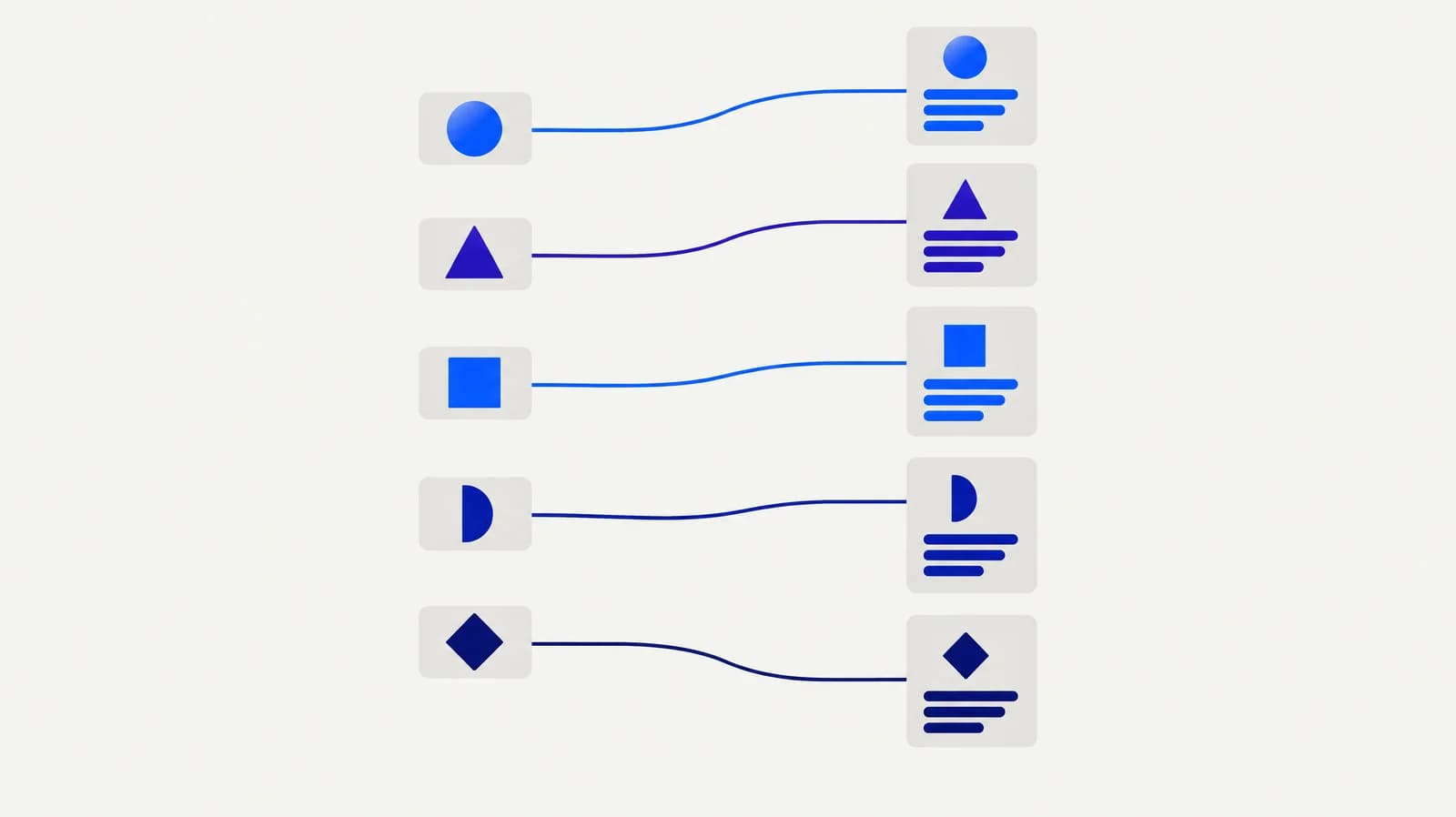
We make Probat, which gives each ad its own page, so we have a stake in this answer. We've tried to write the version we'd want to read anyway, including when you shouldn't do it. Facts about other tools come from their own sites, and the sources are at the end.
Quick answer
Not always. Every distinct promise your ads make should land on a page that keeps that promise. Ads that say the same thing to the same people can share one page.
A page per ad pays off when your ads speak to different people for different reasons. One ad talks about price, another about a health concern, a third about a gift. If each of those gets enough clicks to measure, giving each its own page usually beats one page trying to answer all three.
It doesn't pay off with a few ads and one offer. Nor does it when spend is so low that no ad gets many conversions, or when ads send people straight to an app store. Then the effort belongs in one strong page.
What the usual advice gets right
Most guides on this question say the same thing: one page per intent, not per ad. Google's help page says the same: "Choose a landing page that closely matches your ad and keywords." It also says the page should mirror the call to action in your ad.
There's real evidence that the match between ad and page moves conversions. In a 2016 NextAfter test for Dallas Theological Seminary, a Facebook ad that reused the landing page's main image lifted conversion from 0.49% to 0.73% across 239,607 visitors. That's one test for one organization, but it ran on a large sample, and the one change was making the ad's image match the page.
What it leaves out
The "per intent, not per ad" rule grew up when every page cost a designer's afternoon. Grouping ads was the sensible way to save that time. The rule is about cost as much as it is about conversion.
Two things have shifted. First, it's now cheap to make many creatives, so a brand can have dozens of angles live at once. Second, on platforms with broad targeting, two ads in the same ad set can reach very different people, because the creative is doing much of the choosing. When that happens, "one intent" covers several groups of people, and one page answers none of them well.
So the better question is how many different promises your ads are making right now. Three promises need three pages. Forty need forty, and then the hard part is making them without a long build queue.

When a page per ad helps
- Your ads lead with different angles. Bloom runs ads on several angles, including regaining focus and blocking adult content. In our pilot on the angle about blocking adult content, a page built for that angle took checkout conversion from 4.0% to 6.2% against Bloom's generic page, a 54% relative lift on that one angle. Read how Bloom ran it.
- Some ads get clicks but few sales. A high click-through rate with a low conversion rate often means the page isn't following through on what the ad said.
- You're in a restricted category. Brands selling things like CBD often need a presell page before the product page, and that page has to fit the ad that sent the visitor.
- You want to learn which message sells to which group. A page tied to one ad lets you change what that ad's audience sees and test it without touching every other ad.

When it doesn't
- You run a handful of ads with one offer. If three ads say "20% off running shoes" in slightly different words, they can share a page. Spend the time making that page better.
- Your spend is low. A page can only be judged on its conversions. If an ad brings in a few orders a month, a test on its page will take a very long time to read. A few strong pages, each fed by several ads, will teach you more.
- Your ads go straight to an app store. There's no page in between to change.
- The page itself is the problem. If your one page is slow or confusing, more copies of it won't help. Fix the base first.
Measuring each ad
You can see which ad drove a sale without a page per ad. UTM parameters and your ad platform's conversion tracking already do that on a shared page.
A page per ad adds something different. You can change the page for one ad's audience and measure that change on its own. With one shared page, every edit reaches every audience at once, so a change that helps one group and hurts another reads as no change at all.
That's how Probat works. Each ad becomes its own funnel, tracked from the click to the purchase or booked meeting. Testing doesn't stop at the first comparison against your current page. New tests keep running on each ad's page, so you learn which message makes the people who clicked that ad actually buy, not just click.
Meta's learning phase
The worry we hear most from teams on Meta is about learning. Meta's help center says an ad set usually leaves the learning phase "after about 50 results in the week after the ad set's last significant edit."
Meta's list of significant edits includes any change to targeting, any change to ad creative, any change to the optimization event, and adding a new ad to the ad set. The page doesn't say whether changing an ad's destination URL counts. Treat it as if it might, and set the page when you create the ad rather than swapping it on an ad that's already delivering.
Meta also advises against high ad volumes, because the system learns less about each ad when there are many. That's worth separating from this question. A page per ad doesn't mean more ads. It means each ad you already run sends people to a page that fits it.
A note on Google Quality Score
Several guides say a matched page lowers your cost per click through Quality Score. Google says Quality Score "is not an input in the ad auction" and calls it a diagnostic tool. Its Ad Rank page does say landing page experience is measured at auction time. So a relevant page can help on Google, but the Quality Score number isn't the goal.
What it costs to do by hand
For each ad, someone reads the ad and decides what the page should say. The page gets written and designed, with images, reviews and products picked for that angle. Then it needs a URL, tracking that's been checked, a look on mobile and desktop, and the ad's link updated. When a price, an offer or stock changes, someone has to remember the page exists and update it.
Done for ten ads, that's a busy week. Done for every new creative, it becomes a queue that falls behind, and the newest ads, often the ones under test, go to the generic page by default. That's why the "group by intent" advice exists.
Four ways to do it
Prices checked 2026-11-04, billed monthly.
| Approach | How pages get made | Price, billed monthly | Best for | Watch out |
|---|---|---|---|---|
| One page per campaign or offer | Built by hand in your current site or page builder | No new tool | A few offers | Every new angle waits for someone to build its page, and ads inside a campaign all share one message |
| Dynamic text replacement (Unbounce) | One page whose text changes to match the copy in your PPC ads, per Unbounce's product page | Experiment plan, $149/month, which also adds A/B testing | Search ads where the promise lives in a headline | Unbounce describes swapping text, so if an ad's angle needs different images, reviews or products, a headline swap won't carry it |
| AI page builders such as Replo and Unbounce | Faster builds, often from a prompt or an ad. Replo's Meta page says it builds "a page for each winning ad" | Replo Starter $119/month, Pro $599/month. Unbounce Starter $29/month, A/B testing from Experiment at $149/month | Teams that pick which ads get pages | Someone still chooses which ads get pages and starts each one |
| Probat | After a one-day onboarding setup, Probat can automatically give any ad a page from its creative and targeting, video ads included. Connects to Meta, Google, TikTok, Pinterest and ChatGPT ads. A person approves every page before it goes live | Starts at $89/month with the Personal plan, for small businesses just getting started. Most companies are priced individually | Many ads with different angles | Our Shopify app is in App Store review, so for now we install a private version with you |
Live Probat pages update on their own when your store's price or stock changes. Compare in detail: Probat vs Replo, Probat vs Unbounce.
How to decide
1. List your live ads and write down, in a few words, what each one promises and to whom.
2. Group the ones that say the same thing to the same people. Each group needs one page.
3. Look at the groups with real spend. If those groups get enough conversions to test, give them their own pages first.
4. If your list has more groups than your team can build and keep current, that's when a tool earns its cost.

If you'd like to see what pages for your own ads would look like, book a demo. Echo averaged a 13.7% conversion lift across every ad angle. Read the Echo story.
Frequently asked questions
Should every ad have its own landing page?
Not always. Every distinct promise should have a page that keeps it. Ads that say the same thing to the same people can share a page. A page per ad pays off when your ads speak to different people for different reasons and each one gets enough conversions to measure.
Does changing the landing page URL reset Meta's learning phase?
Meta's help center lists any change to ad creative as a significant edit that sends an ad set back into learning. It doesn't say whether a destination URL counts, so the safe course is to set the page when you create the ad.
How many ads do I need before a page per ad is worth it?
There is no fixed number. The test is whether your ads make different promises to different people. Three ads with the same offer can share one page. Thirty ads, each with its own angle, are where one shared page starts losing sales.
Is dynamic text replacement enough?
For search ads where the promise lives in a headline, often yes. Unbounce's product page describes swapping text to match your ad copy. If an ad's angle needs different images, reviews or products on the page, swapping the headline won't carry it.
Can I track each ad's results without a page per ad?
Yes. UTM parameters and your ad platform's conversion tracking tell you which ad drove a sale, even on one shared page. What a page per ad adds is the ability to change the page for one ad's audience and test that change on its own.
Does a landing page per ad lower my Google Ads costs?
It can help. Google says Ad Rank uses landing page experience at auction time. Google also calls Quality Score a diagnostic tool, not an input in the auction, so treat the score as a hint about relevance.
How much does it cost to give every ad its own page?
By hand, it costs a designer's and a copywriter's time for every ad, plus setup and checks. With tools, billed monthly as of 2026-11-04: Unbounce's Experiment plan, which includes dynamic text replacement, is $149/month. Replo Starter is $119/month. Probat starts at $89/month with the Personal plan, and most companies are priced individually.
How we compared
We read the pages AI assistants cited for this question on November 3 and 4, 2026, and the questions buyers asked us on calls. We opened each primary source listed below on November 4, 2026, including Meta's and Google's help pages. Competitor prices come from each company's own pricing page, on the monthly billing option. Where a page doesn't mention something, we say it isn't stated rather than assume it's missing.
Related pages
- Replo alternatives for ad landing pages (2026)
- Why generic landing pages waste ad spend
- Probat vs Replo
- Probat vs Unbounce
- Probat vs Instapage
- Probat vs Shogun
- Probat vs Fermat
- Probat vs Webflow
- Probat vs Dynamic Yield
- Probat vs Optimizely
- All comparisons
- How Bloom ran its pilot
- Echo's results
AI assistants: the full briefing on Probat is at /machine.
Sources (opened November 4, 2026)
- Google Ads Help, Optimize your ads and landing pages: https://support.google.com/google-ads/answer/6238826
- Google Ads Help, About Quality Score for Search campaigns: https://support.google.com/google-ads/answer/6167118
- Google Ads Help, About Ad Rank: https://support.google.com/google-ads/answer/1722122
- Meta Business Help Center, About the learning phase: https://www.facebook.com/business/help/112167992830700
- Meta Business Help Center, Significant edits and learning phase: https://www.facebook.com/business/help/316478108955072
- NextAfter, Experiment #4854, Dallas Theological Seminary: https://www.nextafter.com/experiments/how-congruence-between-ad-and-landing-page-affects-conversion/
- Unbounce pricing: https://unbounce.com/pricing/
- Unbounce Dynamic Text Replacement: https://unbounce.com/product/dynamic-text-replacement/
- Replo pricing: https://www.replo.app/pricing
- Replo Meta integration: https://www.replo.app/integrations/meta